
Few cities carry a romantic reputation as heavy as Paris. Film, song and well-worn phrase about love at first sight all seem to assume the city as its natural backdrop, as though the Seine and its bridges came pre-loaded with the conditions for falling in love.
Or you prefer rather to call? +41 22 900 11 28
The reality, for most people who actually try to date there, is considerably more complicated. Paris is genuinely beautiful, rich in culture, and one of the more interesting places in the world to build a life. It is also a city with its own specific social codes, its own particular difficulties for singles, and its own reasons why so many residents describe modern dating there as something closer to soul-crushing than cinematic. Understanding the gap between the myth and the reality is the first step towards actually navigating it well.
The myth of Paris as an inherently romantic city is not entirely invented. The city’s aesthetics genuinely lend themselves to intimacy: candlelit bistros, long walks along the river, a culture that has historically taken courtship, conversation and pleasure seriously. This is real, and it is part of what makes the city genuinely wonderful for a date.
The reality that coexists with this myth is considerably less cinematic. Paris is also a city of striking demographic density and social isolation. According to INSEE, France’s national statistics institute, more than half of Parisian households — 52.8% — consist of a single person living alone, a proportion notably higher than the wider Paris metropolitan region. This is not simply a reflection of romantic independence. It is a structural feature of a city where meeting people in a sustained, organic way is often harder than the postcard version of Paris suggests.
The gap between myth and reality matters because it shapes expectations in ways that can genuinely undermine the dating experience. Arriving in Paris — or living there — with the assumption that romance should simply happen, cinematically and effortlessly, tends to produce disappointment when the reality turns out to require rather more deliberate effort than the myth implies.
Parisian dating culture operates on a set of conventions that differ meaningfully from the more explicit, structured dating cultures found in the UK, the US or much of Northern Europe.
The most noticeable difference is the absence of an explicit “asking someone on a date” moment. Romantic interest in Paris tends to develop through repeated, organic contact — coffee, a shared drink, a walk — rather than through the formally defined “date” that characterises Anglo-American dating culture. This can feel, to outsiders, genuinely ambiguous: without an explicit invitation, it is often unclear whether an interaction is romantic or simply social, and that ambiguity is, to a significant degree, the point. French dating culture tends to resist the kind of explicit labelling that other cultures use to reduce uncertainty.
Conversation itself carries real weight. Parisian social life places considerable value on genuine intellectual engagement — literature, politics, cinema, ideas debated with real interest rather than treated as small talk to be gotten through. A companion research guide developed with a French relationship therapist for international daters visiting the city noted this directly: Parisians tend to favour substantive discussion over surface-level pleasantries, and daters who lean into this rather than resisting it tend to fare considerably better.
Friend groups also play an outsized role. Many French adults maintain close, long-standing friendship circles formed at school and maintained for decades, and being introduced into that circle carries genuine social significance — closer, in some respects, to a milestone of commitment than a simple social nicety. For anyone new to the city, particularly expats, this can make the early stages of integration into Parisian social life feel slower than expected, even when individual romantic connections develop easily.
The honest answer depends considerably on what a single person in Paris is actually looking for, and how they approach the search.
The statistics on Parisian solitude are genuinely striking. Beyond the sheer proportion of single-person households, national research on loneliness in France — the long-running annual Solitudes study conducted by the Fondation de France — has consistently found that residents of large urban areas report feeling lonely at notably higher rates than those in rural areas, even though rural isolation is more severe in terms of actual social contact. In its most recent edition, 28% of residents in cities of more than 100,000 people reported feeling lonely, compared with 21% in rural areas. Density, in other words, does not reliably translate into connection. Paris has an abundance of people and, for many residents, a genuine shortage of the kind of sustained contact that produces real relationships.
At the same time, recent survey data on French dating attitudes tells a more hopeful story about intention. Bumble’s Global Dating Trends research for 2025 found that 72% of French singles remain actively engaged in the search for a long-term partner, despite the well-documented difficulties. This is worth holding alongside the loneliness statistics: Paris is not a city where singles have given up. It is a city where the infrastructure for meeting people organically has become considerably weaker than the underlying desire for connection.
For singles who bring genuine intentionality to the search — who do not assume that simply living in a romantic city will produce romance on its own — Paris remains an exceptional place to build a relationship. For those who arrive expecting the city to do the work, the experience tends to be considerably more frustrating.
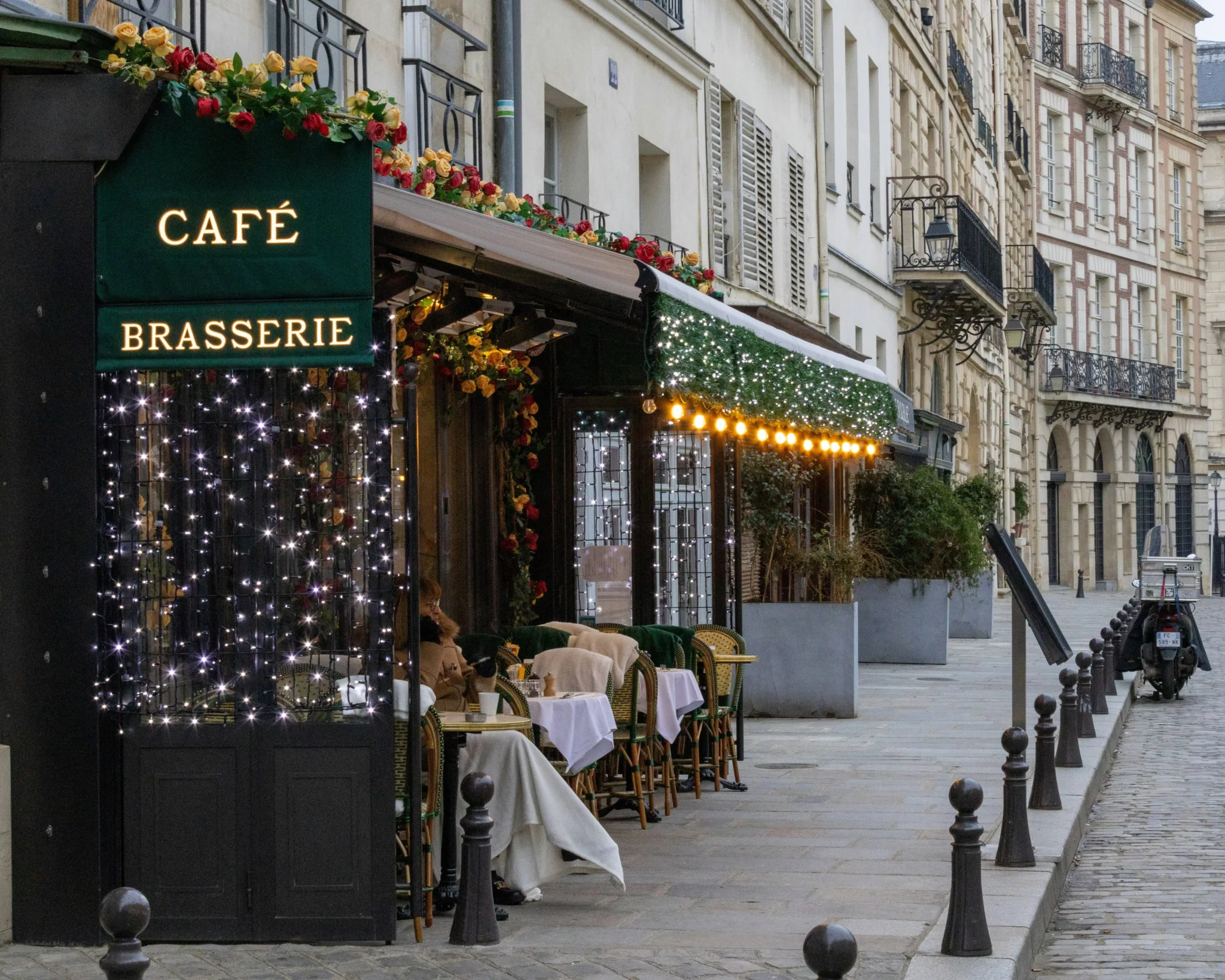
The difficulty of dating in Paris is not primarily an expat problem, though it is frequently framed that way. French singles report many of the same frustrations.
Part of this is structural. The organic, unstructured nature of Parisian courtship — the absence of an explicit “date” — cuts both ways. It allows romance to develop naturally when circumstances align, but it also means that ambiguity can persist for a long time before either person is willing to name what is actually happening. This is a genuine source of frustration reported by residents themselves, not only by outsiders trying to decode an unfamiliar cultural system.
Financial and social pressures compound the difficulty. Recent research on French dating attitudes has found that a majority of women now weight a partner’s financial stability, values and mental health considerably more heavily than in previous years — a shift that reflects genuine economic uncertainty rather than simple pickiness, but one that raises the practical bar for what a serious relationship requires from both people involved.
The density paradox already described applies as much to native Parisians as to newcomers. Long-standing friend groups, while socially rich, can also become somewhat closed over time, particularly once people reach their thirties and their social circles have largely solidified. Meeting genuinely new people, for Parisians and expats alike, increasingly requires deliberate effort rather than simply happening through the ordinary rhythms of city life.
Yes, and the difference is considerably more than simply one of scale. Paris compresses and intensifies dynamics that exist more diffusely across France as a whole.
The pace of life is one clear distinction. Paris moves faster and operates under greater professional and financial pressure than most of provincial France, and this pressure shapes the time and emotional bandwidth people have available for dating. The conversation-led approach to courtship that characterises French dating culture more broadly still applies in Paris, but it competes with a considerably busier and more demanding daily rhythm than in smaller French cities.
International composition is another significant difference. Paris has a far higher proportion of international residents, expats and visitors than most of the rest of France, which creates both opportunity and complication. Recent research indicates that a large majority of young French singles — 78% in one Bumble-commissioned study — are open to dating people of other nationalities, which is a genuinely positive signal for internationally mobile daters. At the same time, navigating a relationship across language, cultural expectation and differing assumptions about pace and commitment adds a layer of complexity that dating within a single shared cultural framework does not carry.
What remains consistent across both Paris and the rest of France is the underlying emphasis on conversation, subtlety and organic development over the more explicit, app-driven conventions common elsewhere. Paris simply asks more of the people trying to date within it, precisely because its pace and density work against the natural conditions that make that organic approach easiest to sustain.
Paris rewards a particular quality of presence rather than a particular strategy. What tends to work is not a set of tactics but an orientation: genuine curiosity, patience with ambiguity, and a willingness to invest in conversation rather than seeking a fast, legible outcome.
Substantive engagement matters considerably more in Paris than in cities with a more transactional dating culture. Arriving with genuine opinions, genuine interests and a willingness to discuss them seriously tends to be rewarded, where a more guarded or superficial approach tends to read as disengagement rather than mystery. This is not about performing sophistication. It is about bringing real intellectual and emotional presence to an interaction, which Parisian social convention has historically valued highly.
Patience with the city’s ambiguity is equally important. Trying to force an early, explicit definition of what a connection is — insisting on a formal “date,” pushing for premature clarity — tends to work against the grain of how romantic interest actually develops in Paris. The city rewards those willing to let a connection develop at its own, sometimes frustratingly unclear, pace, while still maintaining enough self-respect to recognise when genuine ambiguity has simply become avoidance.
Finally, Paris rewards a willingness to build a genuinely new social life rather than relying entirely on existing circles or digital platforms to produce connection. Given the closed nature of many established friend groups and the density paradox already described, singles who actively seek out new communities, activities and contexts tend to have considerably better experiences than those who wait for connection to arrive passively.
Paris can be an extraordinary place to fall in love. What it cannot do, however romantic its streets and however storied its reputation, is manufacture the right introduction on its own.
At Macbeth Matchmaking, we work with clients based in Paris and across Europe who understand this distinction clearly. They are not looking for the city to solve the problem of finding a compatible partner. They are looking for an introduction made with genuine understanding of who they are, what they value and what kind of relationship would genuinely serve the life they are building — in a city whose particular social rhythms and density paradox make that kind of considered introduction more valuable, not less.
Our process begins with a thorough, confidential conversation about exactly this: not simply what a client is looking for, but who they genuinely are, and what would make an introduction worth making. From there, we draw on an international network to bring together people whose depth and intention are genuinely comparable. Find out more about our matchmaking service in Paris.
If Paris is where you are building your life and searching for someone to share it with, we would be glad to hear from you.
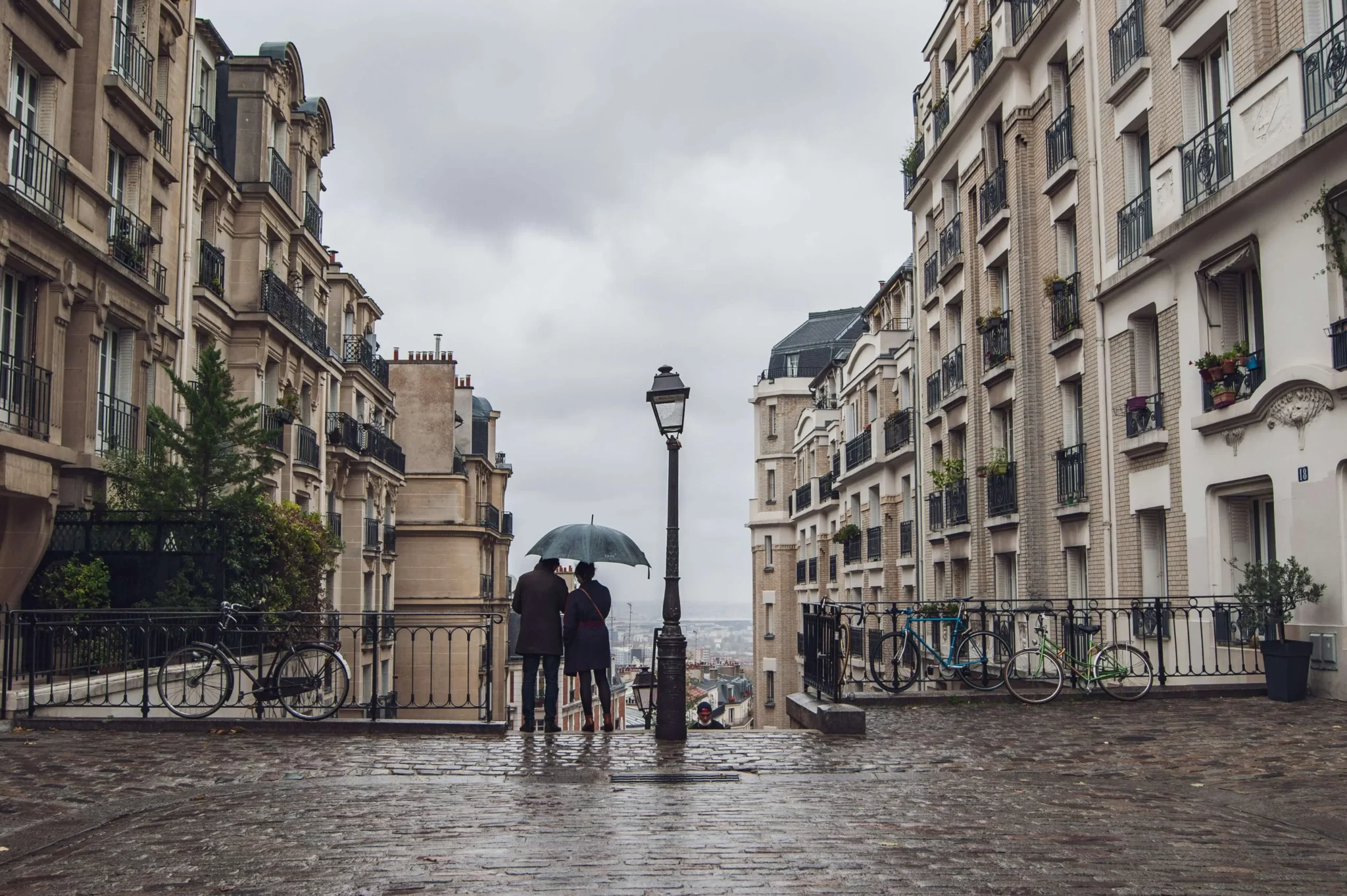
The most significant difference lies in the absence of explicit dating conventions. Where cities in the UK, Germany or the Nordic countries tend to have relatively clear, named stages — asking someone out, a defined first date, an explicit progression towards exclusivity — Parisian dating develops more organically and ambiguously, through repeated informal contact rather than clearly labelled romantic overtures. Conversation and intellectual engagement also carry comparatively more weight in Paris, where genuine debate and discussion function as a form of courtship in their own right. Additionally, the closed nature of long-standing Parisian friend groups can make social integration slower than in cities with more transient or looser social networks, even when individual romantic connections form relatively easily.
The difficulty stems from several compounding factors rather than a single cause. The ambiguous, unstructured nature of Parisian courtship, while culturally rich, can leave people uncertain for extended periods about whether a connection is genuinely romantic. The city’s density paradox means that a very large population does not translate into easy access to new people, particularly once established friend groups have solidified. National research on loneliness in France consistently finds that residents of large cities report feeling lonely at higher rates than those in rural areas, a pattern that applies clearly to Paris. Financial and social pressures have also raised the practical bar for what a serious relationship is expected to offer, adding a further layer of difficulty to an already complex social landscape.
Recent research on French dating priorities finds an increasing emphasis on substance over surface appeal. A growing majority of women, in particular, report weighting a partner’s financial stability, personal values and mental health considerably more heavily than in previous years, reflecting broader economic and social uncertainty rather than simple pickiness. More broadly, Parisians tend to value genuine intellectual and emotional engagement — the capacity for real conversation, shared curiosity about ideas and culture, and a partner who brings authentic presence rather than a curated or performative version of themselves. Long-term compatibility in values and life direction tends to matter more than the more transactional criteria that dominate app-based dating cultures elsewhere.
Yes, though it typically requires more deliberate effort than expats initially expect. The primary challenges are cultural rather than romantic: the closed nature of established French friend groups, the organic and sometimes ambiguous pace of Parisian courtship, and language or cultural differences in how commitment and pace are communicated. On the encouraging side, research indicates that the majority of young French singles are genuinely open to dating people of other nationalities, which removes one potential barrier that expats sometimes assume exists. What tends to matter most is a genuine willingness to engage with French social and conversational conventions rather than importing an entirely different dating framework, combined with patience for a slower, more organically paced process of building both a social circle and a specific romantic connection.